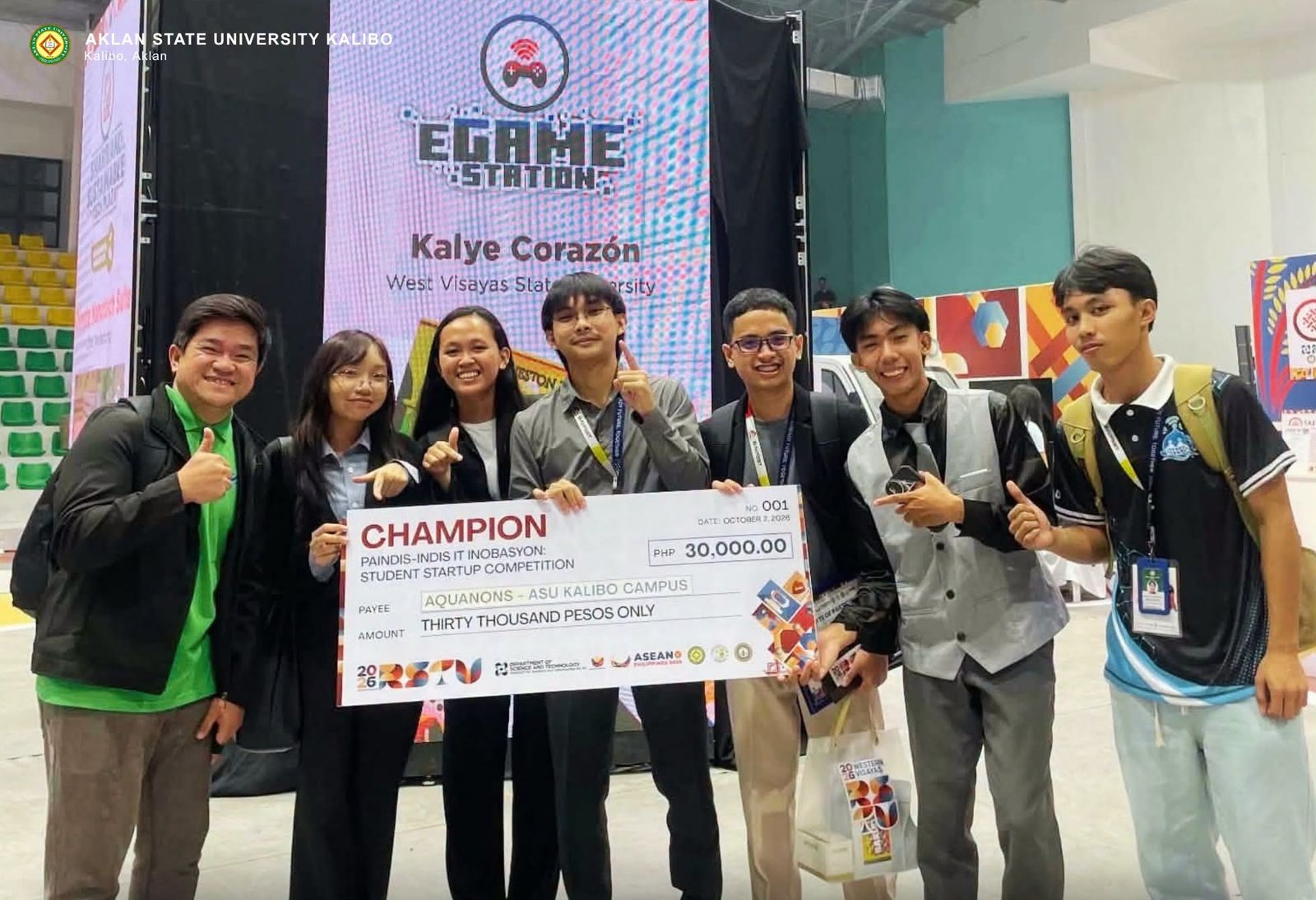
Champion
2026 RSTW Student Startup Competition
AqOne took first place in Paindis-Indis IT Inobasyon organized by DOST Western Visayas during Regional Science, Technology and Innovation Week.
Offline maritime safety · New Washington, Aklan
A fisher’s phone hands the SOS to a boat pod over local Wi-Fi. The boat pod sends it by long-range radio to a shore gateway, and the MDRRMO answers with an ETA.
AIAI helps responders spot rough seas, overdue boats and where to search. See the AI
“Gabay sa Bawat Alon, Konektado sa Bawat Layon.”
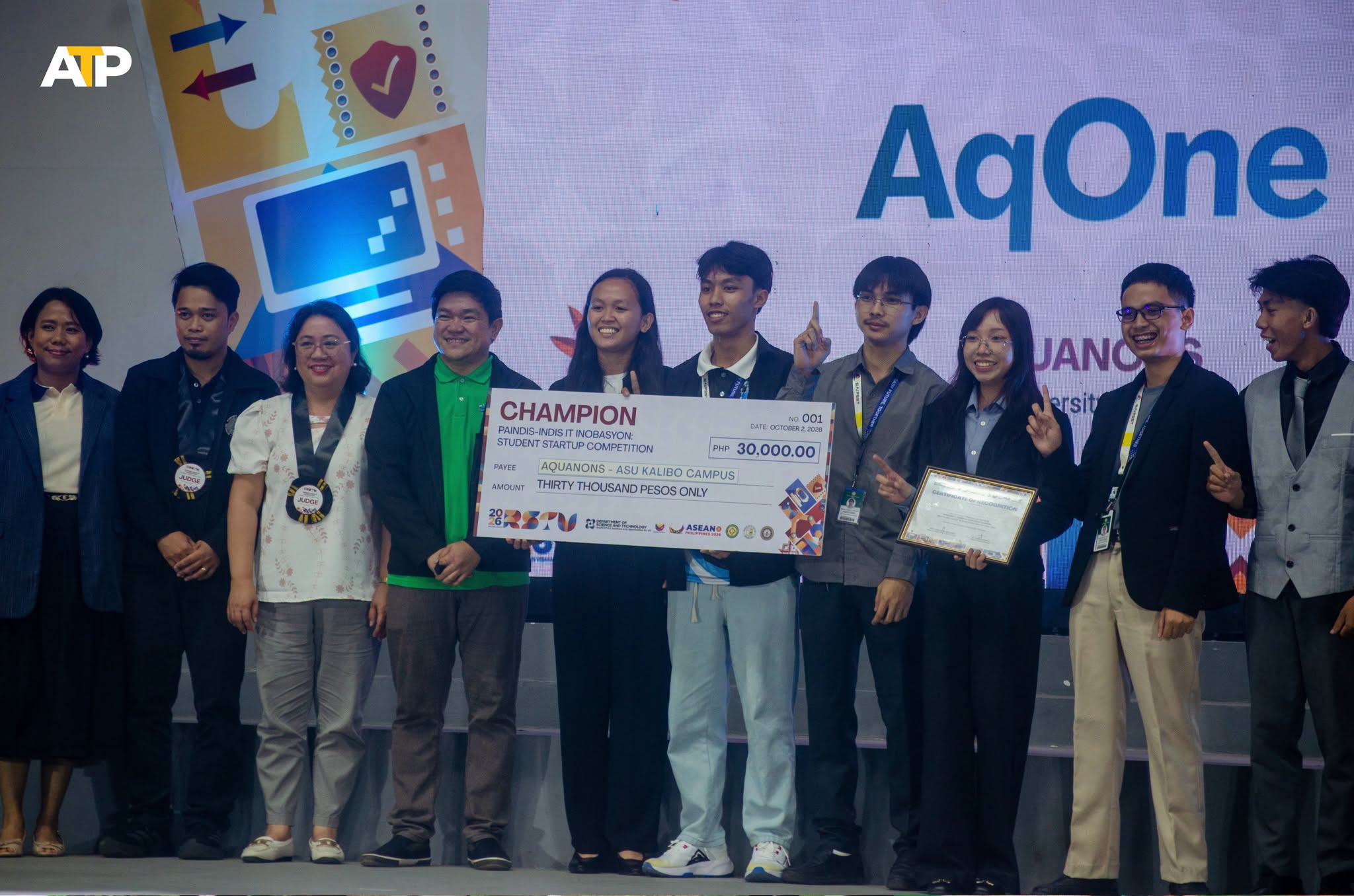
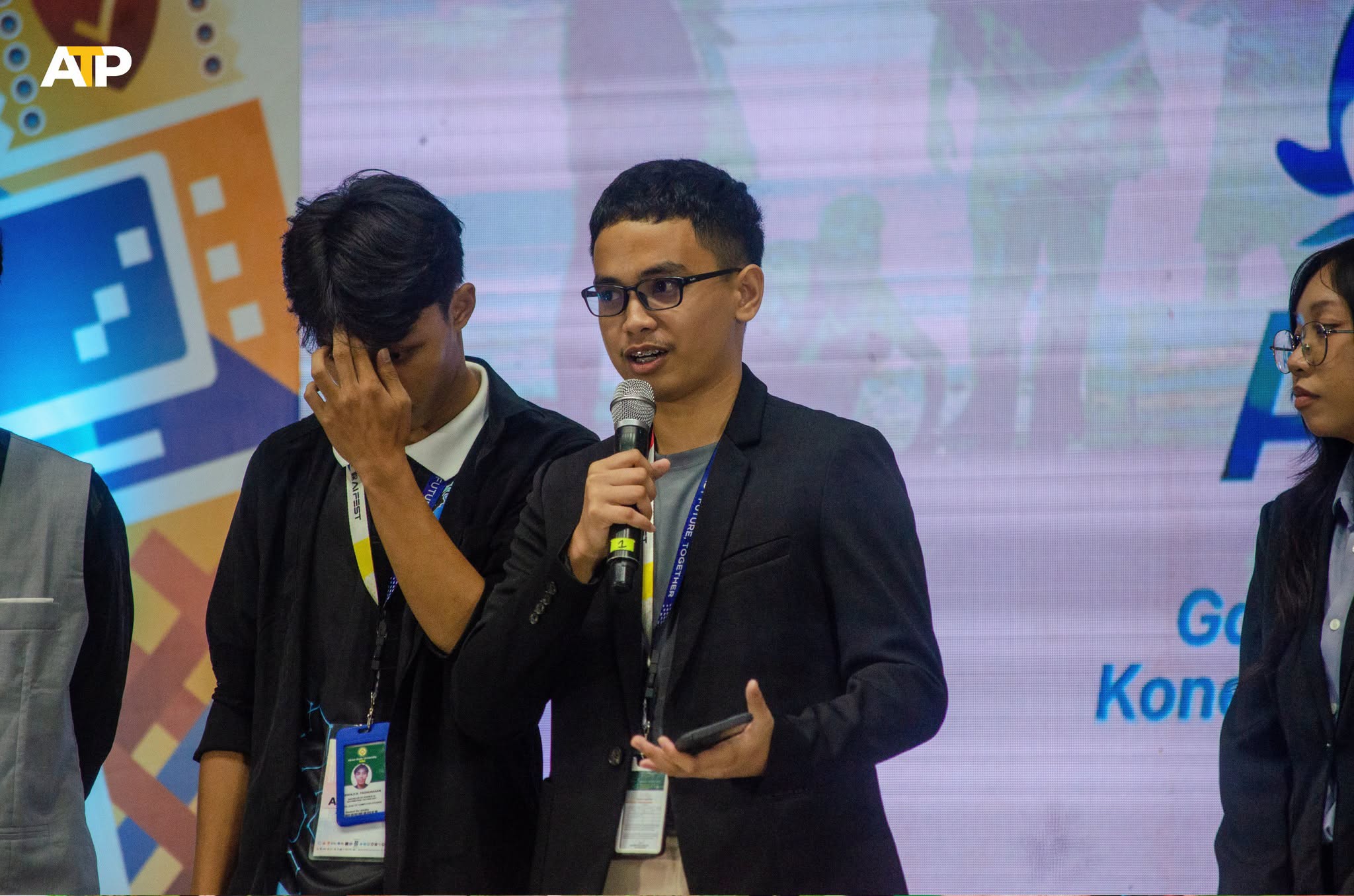
2026 RSTW Champion
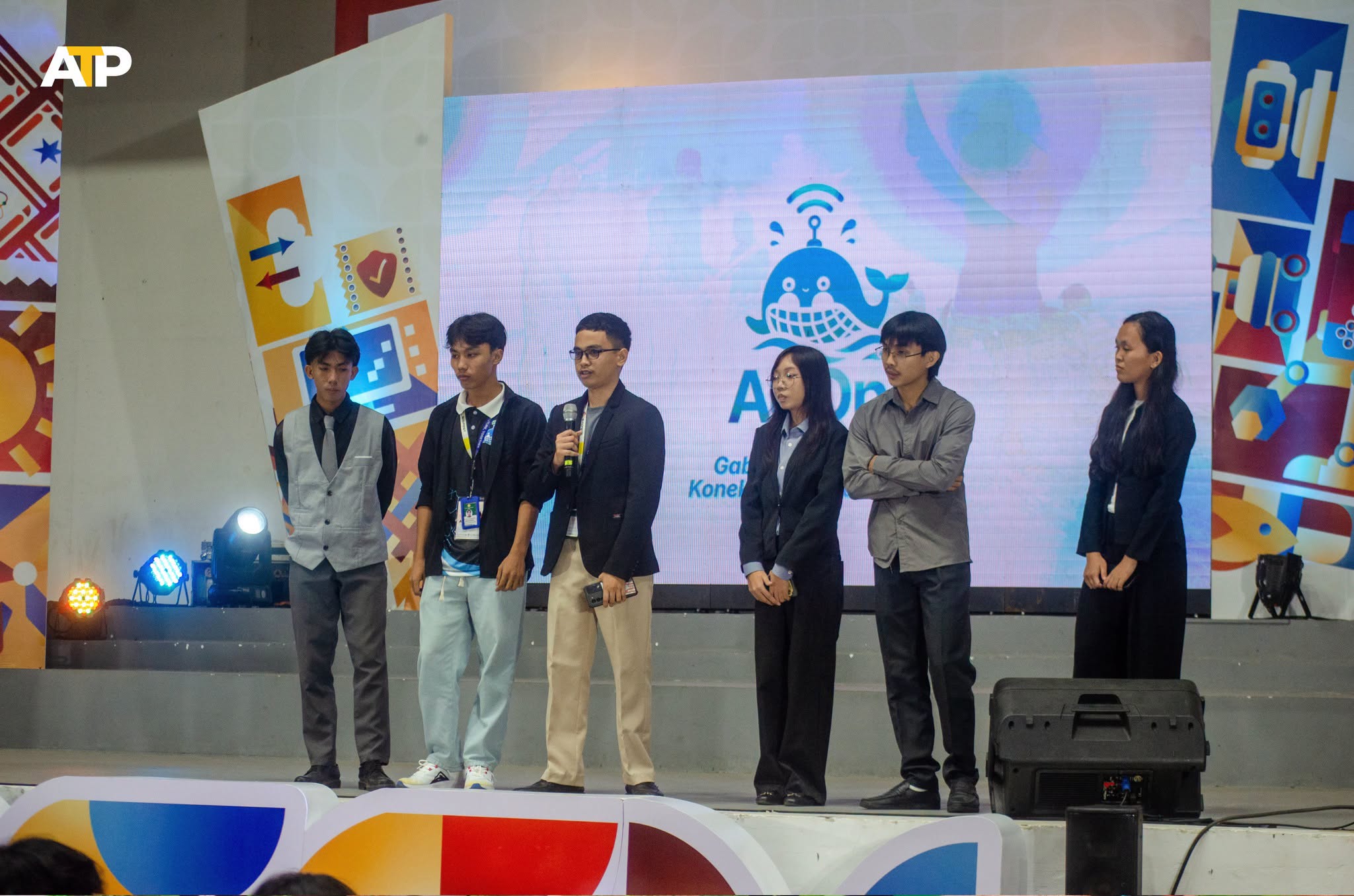
AqOne took first place in Paindis-Indis IT Inobasyon, the Student Startup Competition organized by DOST Western Visayas on Day 2 of the 2026 Regional Science, Technology and Innovation Week (RSTW).
AqOne will represent ASU-Kalibo at Enactus Philippines, 8 to 10 October 2026, at De La Salle University Manila.
Congratulations to Poultri of Team AgriTech, a fellow ASU-Kalibo team, on second place, and to every team that pitched.
AqOne took first place in Paindis-Indis IT Inobasyon organized by DOST Western Visayas during Regional Science, Technology and Innovation Week.
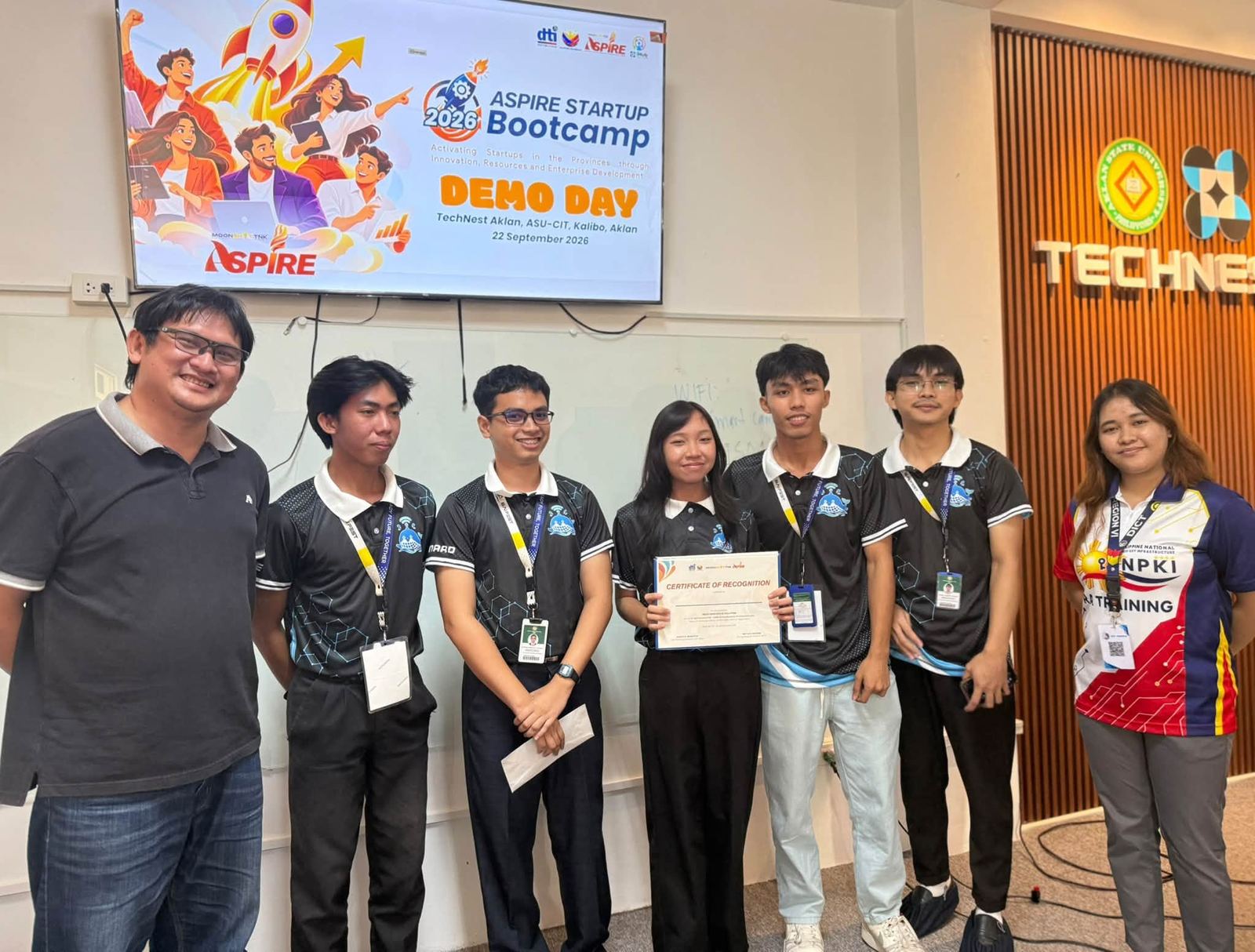
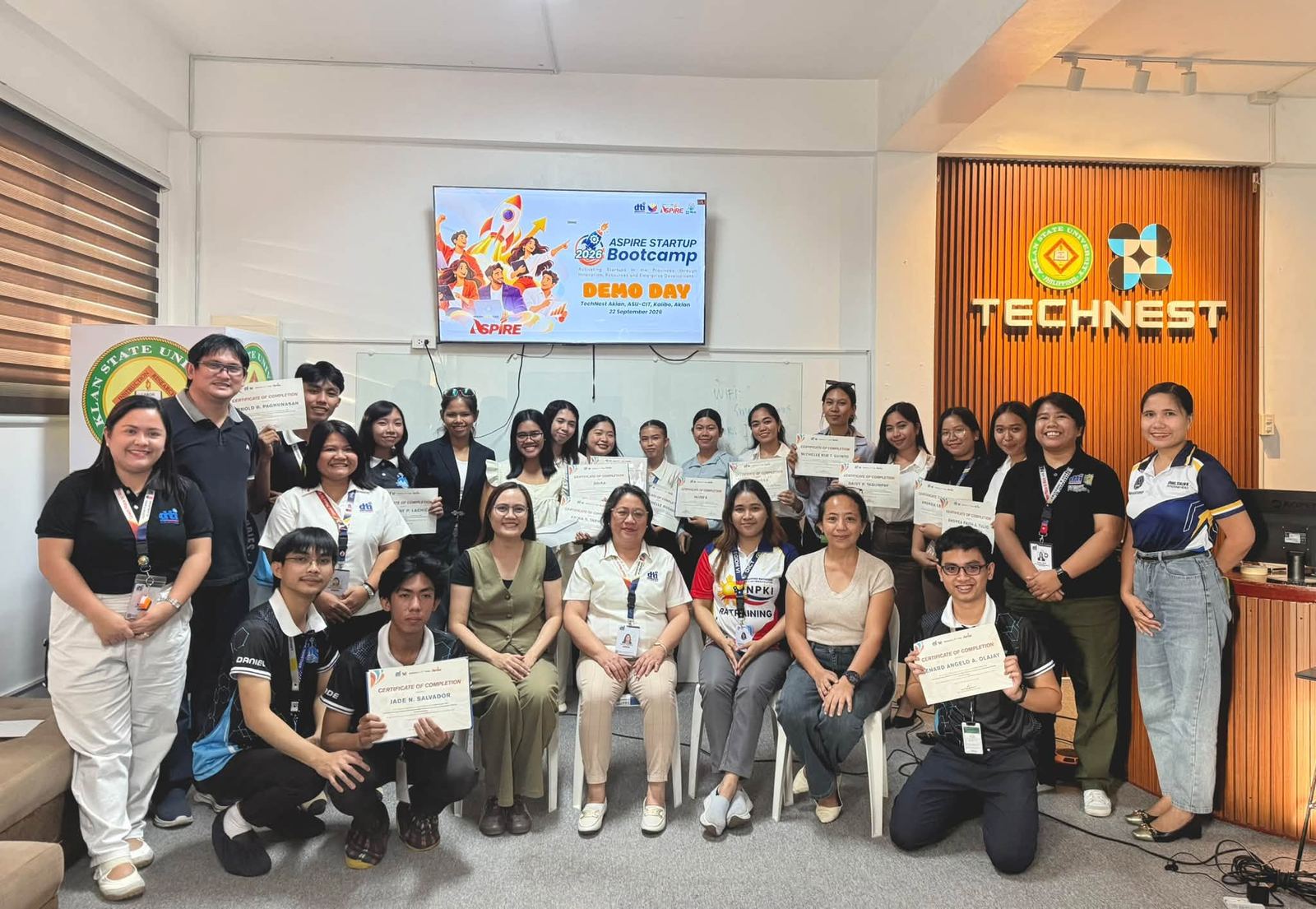
Recognized as the Most Innovative startup at the TechNest Aklan incubation bootcamp organized with the Department of Trade and Industry.
Why AqOne
Offshore, a phone's cell signal can drop out. When an engine fails or the weather turns, a fisher may have no way to call for help, and responders may not know anyone is in trouble.
100,000+
fishing-related deaths every year worldwide
FISH Safety Foundation for The Pew Charitable Trusts, 2022 (opens in a new tab)2 million+
municipal fisherfolk registered with BFAR's FishR registry
DA-BFAR, Philippine Fisheries Profile 2022 (opens in a new tab)27.4%
of fisherfolk were poor in 2023, about 353,190 people, among the highest of any sector
PSA, 2023 Official Poverty Statistics of the Basic Sectors (opens in a new tab)So safety has to be affordable and shared: one boat pod serves everyone on board, and fishers use the phones they already have.
From boat to shore
The fisher presses SOS in the AqOne app. The phone saves it right away, so nothing is lost if the signal drops.
The phone hands the SOS to the boat pod over the pod's own local Wi-Fi. No cell signal or mobile data is needed.
The boat pod sends the SOS by LoRa, a long-range, low-power radio, to a shore gateway. Optional relay buoys can pass it along.
The shore gateway has internet. It forwards the SOS to the AqOne backend, which keeps the incident record.
The SOS appears on the MDRRMO dashboard of the Municipal Disaster Risk Reduction and Management Office. A responder acknowledges it and sends an ETA.
The acknowledgement and ETA go from the shore gateway over LoRa to the boat pod, and on to the fisher's phone.
When the phone does have internet, it also sends the SOS straight to the AqOne backend.
The app never shows a later state without evidence for it.
The system
On the fisher's phone: one-press SOS, a silent SOS option, and an outbox that keeps retrying until the AqOne backend confirms. It opens in Aklanon, with Filipino and English.
FlutterA shared safety box on the boat. It gives phones local Wi-Fi and talks to shore by LoRa.
ESP32-S3 prototype; RAK WisBlock for the pilotA tall radio mast on the shoreline that receives LoRa and forwards to the internet. Optional relay buoys extend its reach.
ESP32-S3 prototype; RAK WisBlock for the pilotKeeps every incident record and serves the MDRRMO dashboard and the AqOne app.
FastAPI and PostgreSQL, deployed on RenderResponders see each SOS on a map, acknowledge it with an ETA, resolve it with a reason, and can reopen it. The AI safety tools live here too.
Web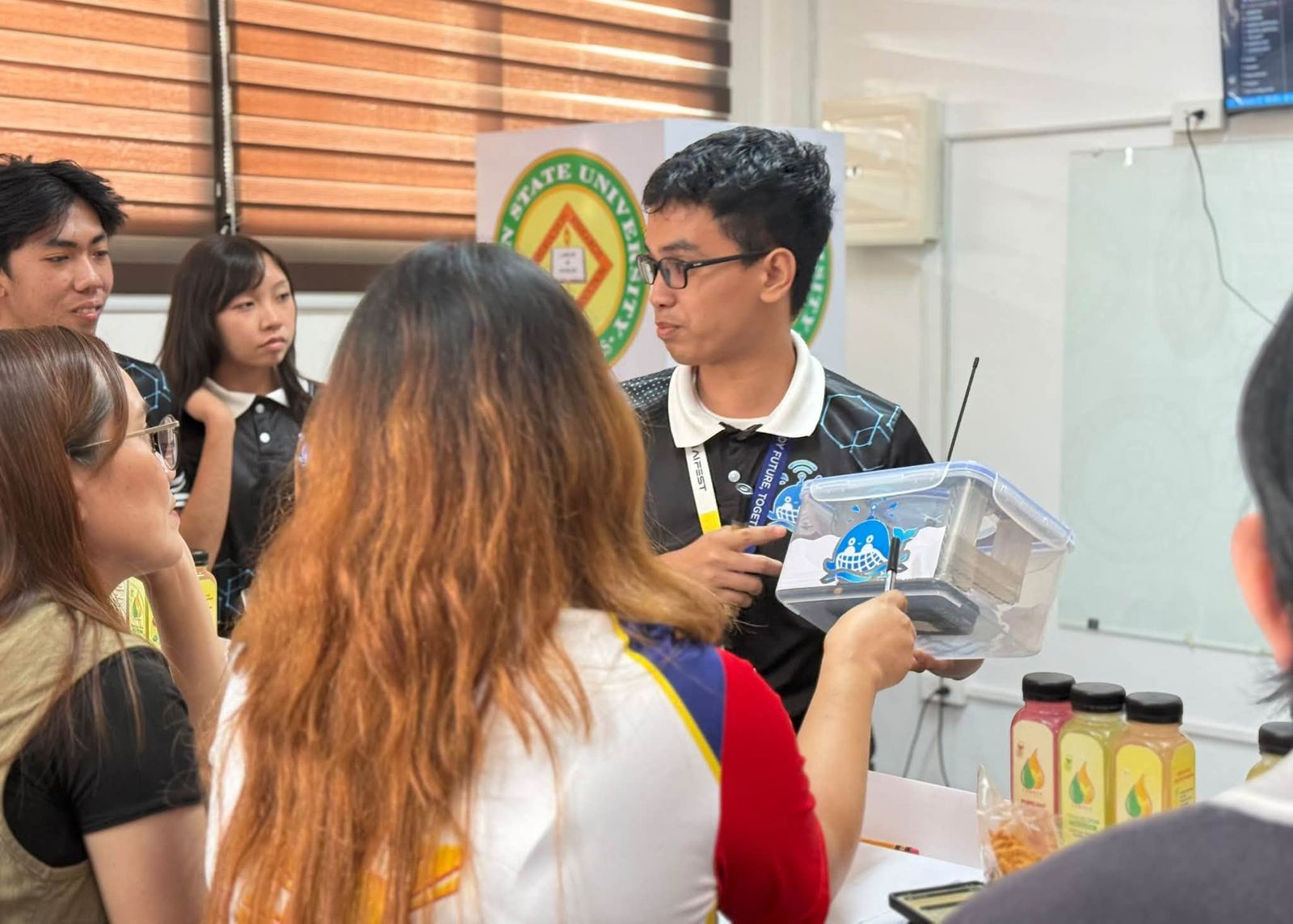
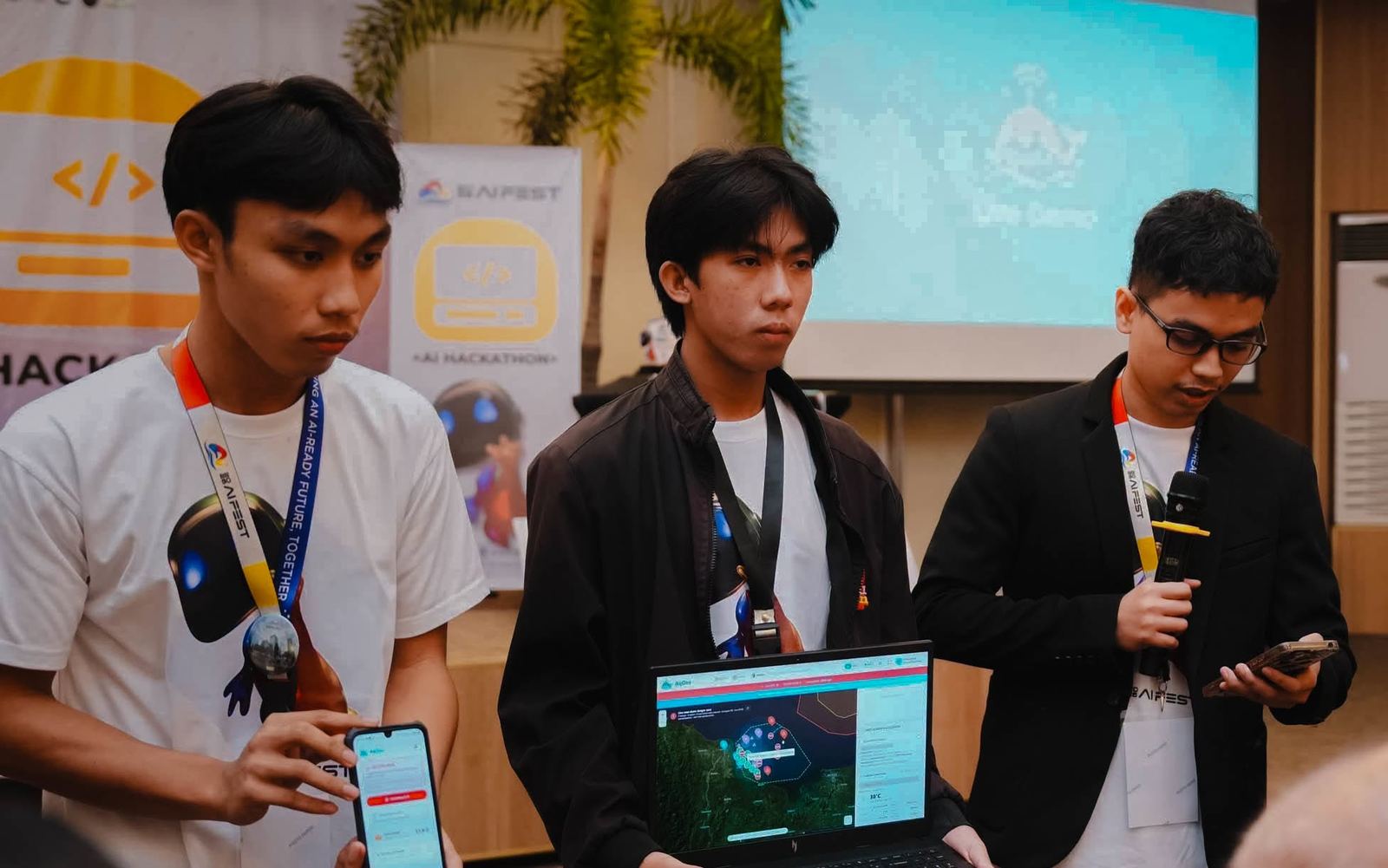
Explore the hardware
Drag to rotate, and scroll or pinch to zoom in on the labelled parts. These are the pilot designs built on RAK WisBlock boards, each shown beside a 1.65 m person with dimension labels for scale.
The shared safety box. It straps on, gives phones local Wi-Fi, and sends SOS messages to shore by LoRa. Shown here mounted on a navigation marker.
Clips onto a navigation marker the LGU already has, turning it into a relay buoy that passes LoRa messages along when a boat is too far from shore to reach the gateway directly.
The shore gateway: the only AqOne device with internet. It hears the boats by LoRa and forwards each SOS to the AqOne backend, then carries the MDRRMO's reply back out.
The product
Fishers carry the AqOne app. MDRRMO responders work from the dashboard. Both follow the same incident, from the first press of SOS to the ETA coming back.
On the sign-in page, choose Explore the tutorial without an account for seven short lessons on sample data.
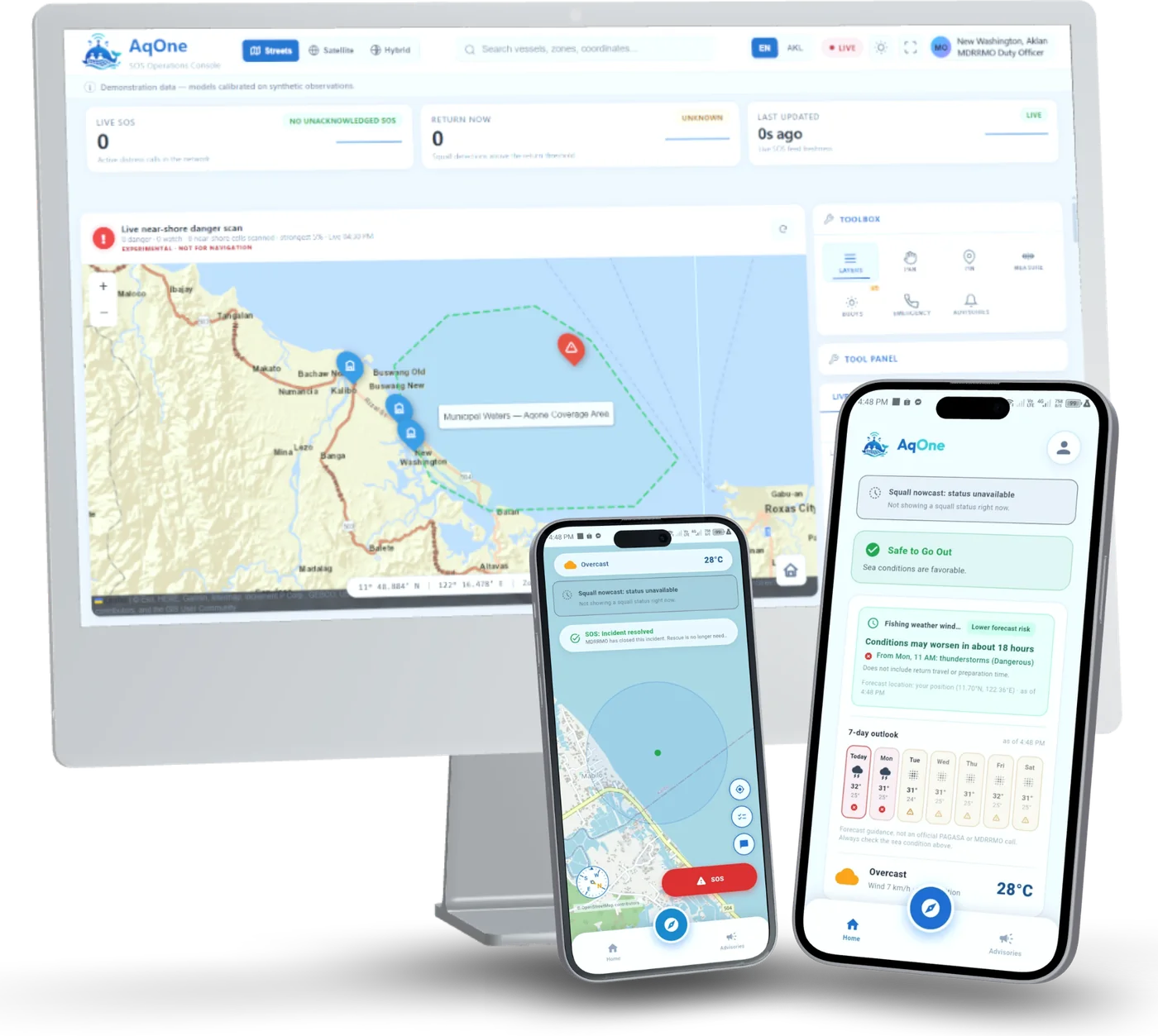
AI safety support
Three AI models and one weather relay help the MDRRMO see trouble earlier, from before a boat leaves to the search that follows an SOS. They advise; responders decide, and the manual SOS never depends on them.
Before the trip
Scores sea risk in the waters off New Washington from live wind, gust, rain and wave data, with a plain reason for each area it flags.
How: gradient-boosted decision trees trained on about two and a half years of real weather, wave and typhoon records. It runs inside the MDRRMO dashboard.
Out at sea
Carries PAGASA thunderstorm, rainfall and wind advisories by LoRa radio to boats that have no phone signal, so fishers hear them in time.
How: a weather-service relay, credited to PAGASA. AqOne does not make its own storm forecast.
When a boat is late
Learns each boat's own trip habits and flags a boat that is late in a way that is unusual for it. It starts with a quiet check-in before any alert.
How: a statistical profile per boat, learned without labels, with four escalation stages instead of a fixed timer.
After an SOS
Follows two thousand possible paths from the last known position and draws where the boat or person is most likely to be. Each area searched updates where to look next.
How: a physics-based Monte Carlo simulation of current and wind, the same family of model search-and-rescue services use.
Prototype. The danger scan is trained on real historical weather, and the overdue check and drift model are calibrated on simulated trips. None has been validated on local New Washington data yet; the pilot is how we will measure them.
Progress
As of 1 October 2026
Manual SOS and acknowledgement
Current focusAI safety support
PrototypeFisheries information
Foundation; catch activity information for BFAR planning, pending agreement with BFARLive on Render and passing automated tests.
Seven guided lessons on sample data, from receiving an SOS to planning a search. Works without a connection.
Passing automated tests; real-device tests still to run.
Opens in Aklanon by default. The translations are drafts awaiting review by native speakers.
When the MDRRMO acknowledges an SOS, nearby AqOne phones that are online sound an alarm so other boats can help. Not yet tested on phones.
Not yet tested end to end on a real phone and boat pod.
An earlier ESP32-S3 build carried an SOS by LoRa to the backend on the bench; the current build has not yet run on hardware. The pilot build moves to RAK WisBlock boards.
Outdoor range tests are next.
Not yet seen reaching a phone.
Running on the dashboard with sample data; not yet validated on local data.
Backend intake exists; no app screen yet.
Our journey and milestones, from bootcamp builds to the RSTW championship.
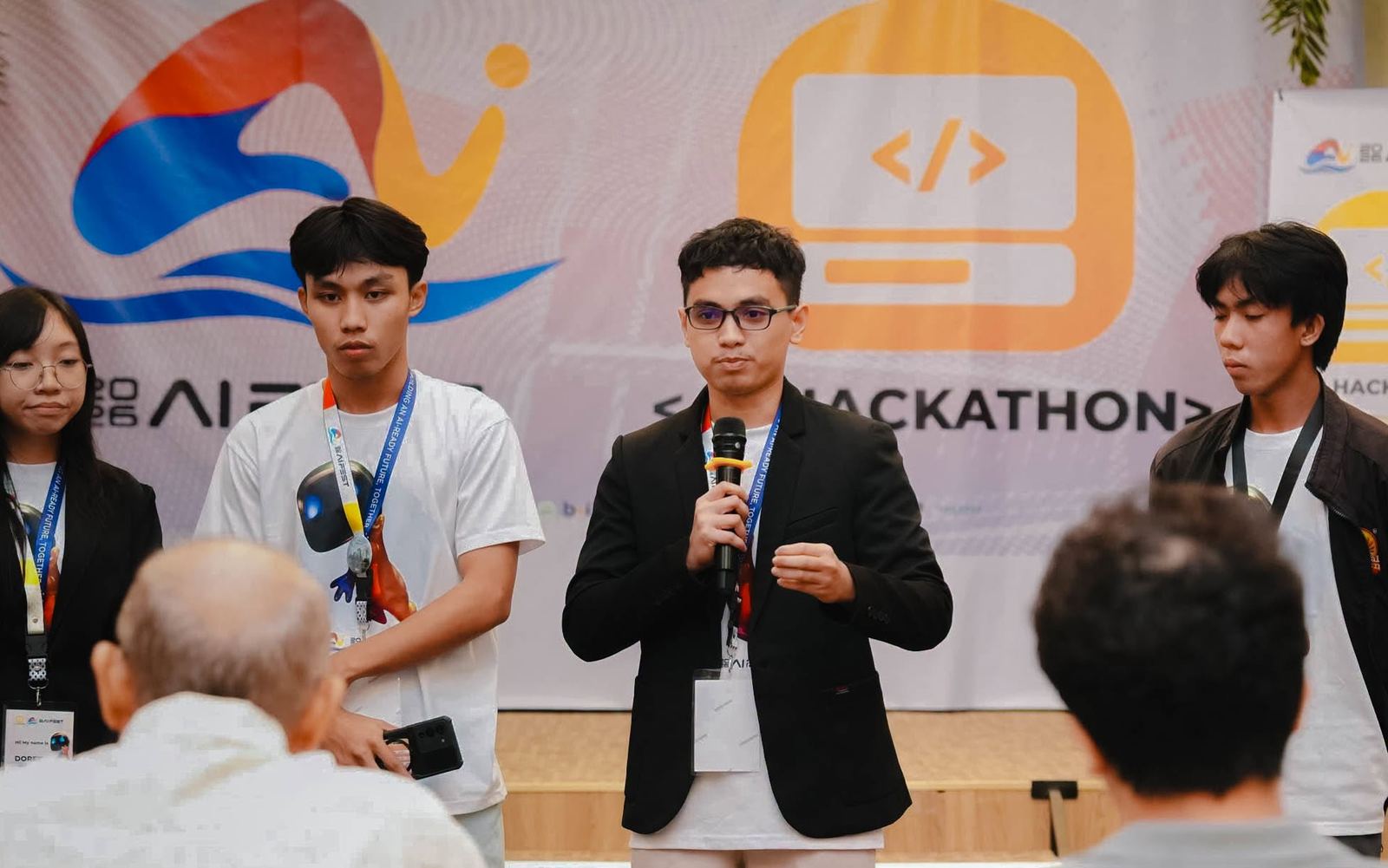
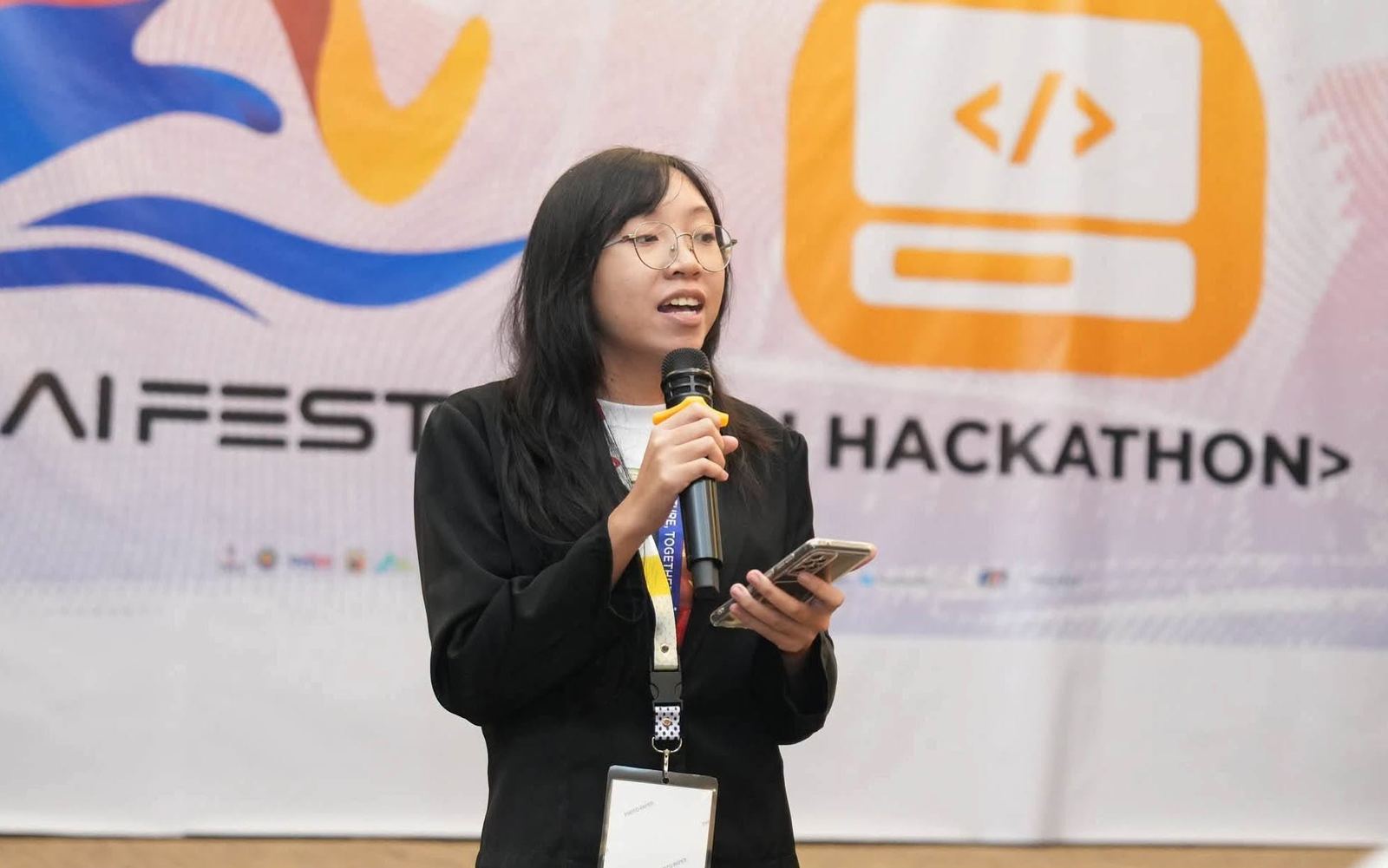
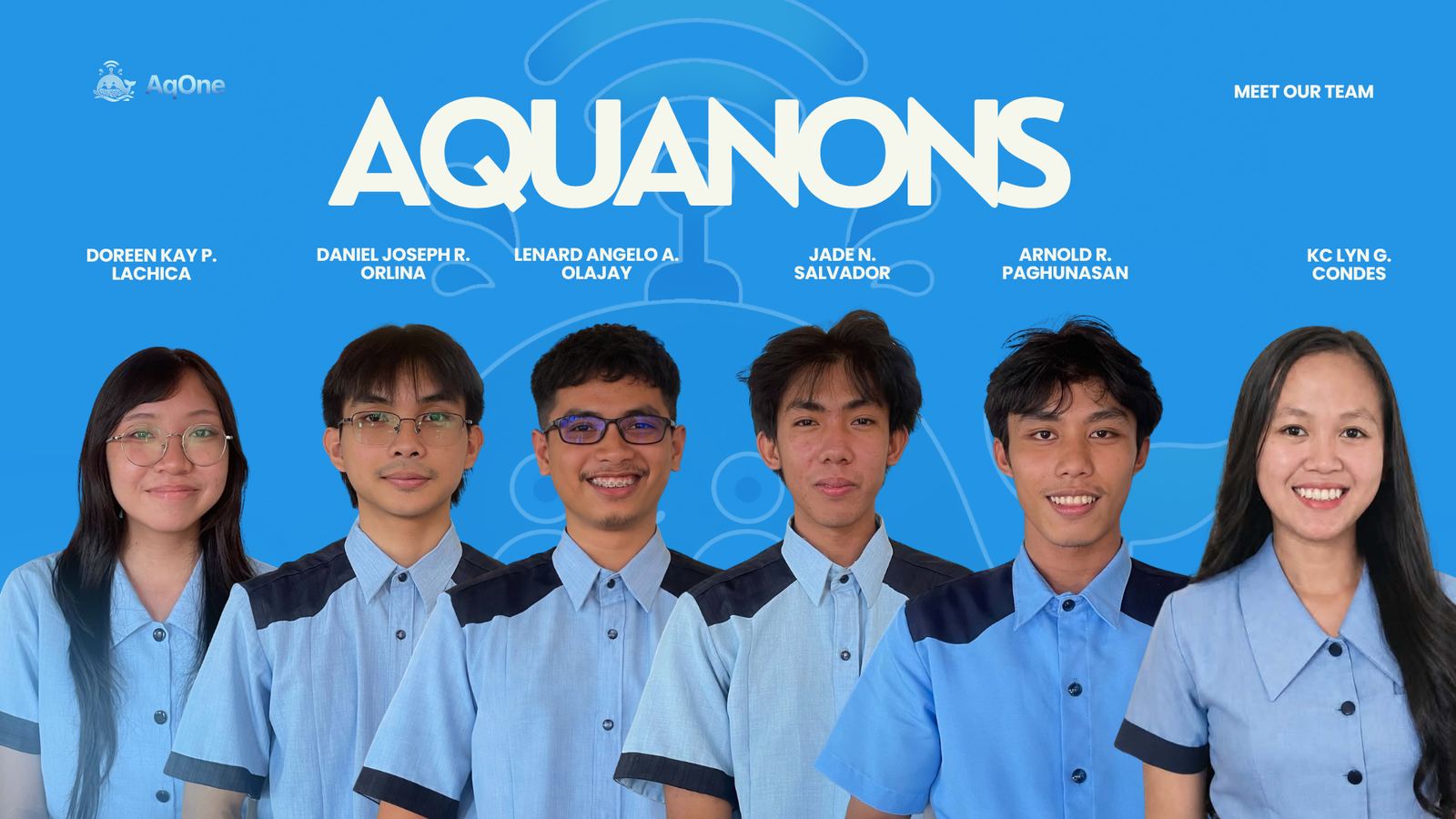
Team Aquanons
Six students from Aklan State University Kalibo, coached by Mr. Edward S. Gumban.
Founder and Lead Developer
System architecture, the AqOne backend, the LoRa ingest pipeline and cloud deployment.
Frontend Developer, MDRRMO Dashboard
The web console responders use to track, acknowledge and resolve SOS calls on a live map.
Hardware and Embedded Systems Engineer
Boat pod and shore gateway electronics, and the LoRa radio firmware that links them.
Mobile Developer, AqOne App
The Flutter app fishers carry: the SOS flow, offline delivery to the boat pod, and Aklanon, Filipino and English support.
Business and Brand Lead
Pitching, brand identity and business direction.
Business Development Associate
Pitch support and outreach to partners and sponsors.
Partner with us
We have no formal partners yet.
Contact the lead developer at olajaylenardangelo@gmail.com.